Transform Student Success From First Interest to Lifelong Growth

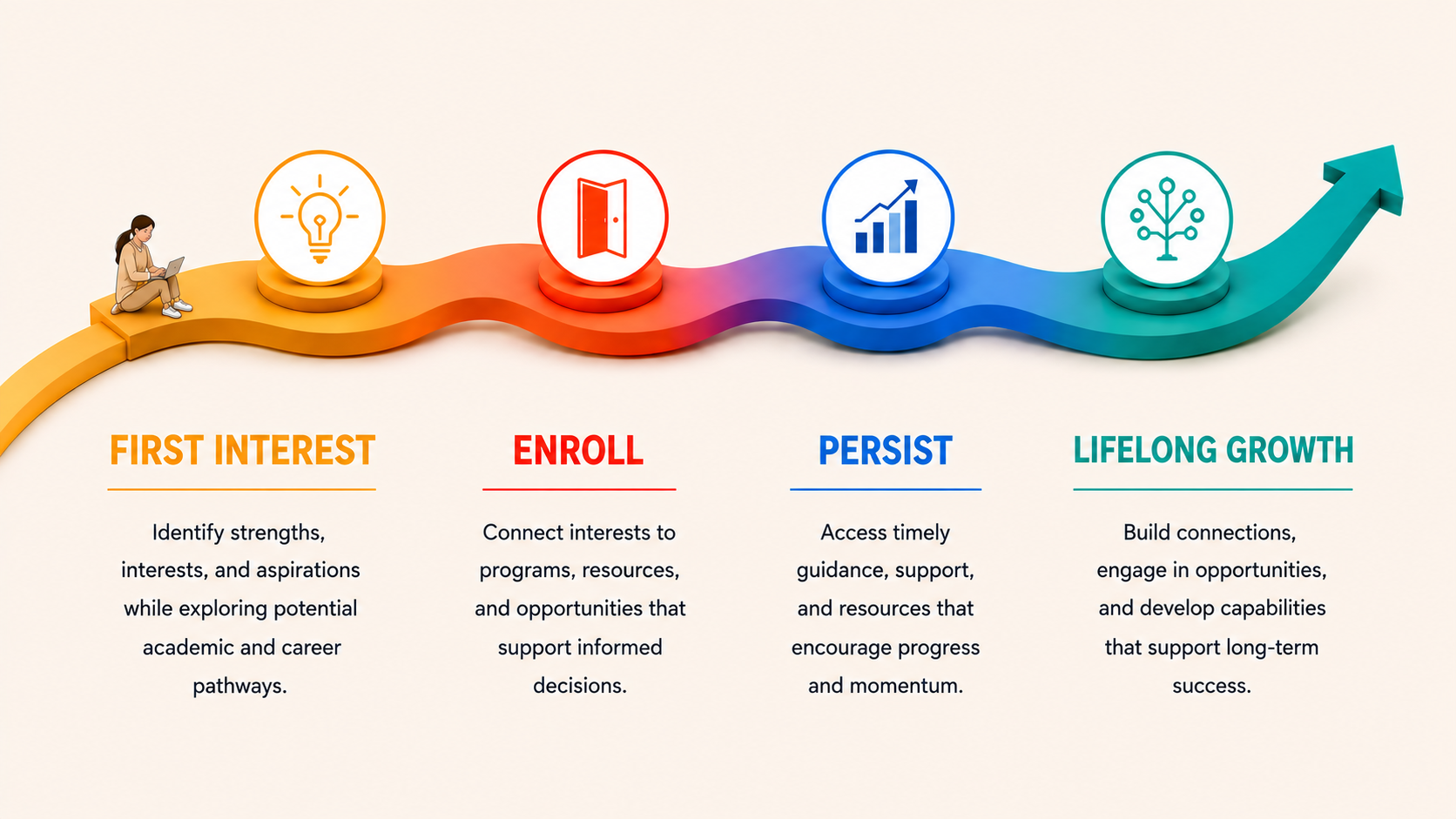
Every student journey is built through a series of critical advising experiences, from orientation and exploring campus resources to choosing a program, preparing for careers, and deciding what comes next. Pathways by Advisor AI helps recruitment, advising, career services, and student success teams craft a connected, modern experience by bringing together the resources and support infrastructure students need most at each step.

Teams can start with a single use case, such as dual enrollment, undeclared advising, career exploration, or workforce readiness, and engage students within weeks. As teams learn what drives engagement, they can expand successful approaches to new student populations, strengthen support across the student journey, and build a culture of continuous improvement grounded in research, experimentation, and shared learning.

happy-proud-reading-project-women-planning-office-web-designer-help-with-idea-laptop-online-discussion-email-brainstorming-together-with-creativity-collaboration

Use Cases Across The Student Lifecycle

  • High School Exploration

  • Dual Enrollment

  • Adult Learners

  • Undeclared Advising

  • Program Advising

  • Proactive Advising

  • Career Exploration

  • Internship Preparation

  • Workforce Readiness

education-writing-happy-with-portrait-man-library-study-research-classroom-quiz-focus-learning-notebook-with-male-student-university-knowledge-scholarship-project

High School Program Exploration

The Challenge

Many traditional-age students are interested in attending college but are unsure about what they want to do next. At the same time, enrollment management teams often have limited visibility into prospective students' interests and hesitation points before an application is submitted, making it difficult to provide personalized guidance at scale.

How Advisor AI Helps

Enrollment Pathways help prospective students easily explore academic programs and connect their interests to areas of study at your institution. As students engage, enrollment teams gain insight into what students are exploring, enabling more personalized outreach and interventions.

Getting Started

This pathway can be embedded into inquiry campaigns, outreach to high school juniors and seniors, and campus visit programs. Teams can begin with a single student population, measure engagement and program trends, and expand to additional recruitment initiatives over time.

Female student completing dual enrollment college courses while in high school

Dual Enrollment

Challenge

Dual-enrollment students are already earning college credit, but many do not fully understand how their current coursework connects to a credential, degree pathway, transfer opportunity, or future career. As a result, Students may miss opportunities to continue toward their post-secondary goals.

How Advisor AI Helps

Enrollment Pathways help dual credit students connect their current courses to academic programs, explore future educational and career opportunities, and better understand the steps required to achieve their goals. Students gain a clearer sense of purpose and direction, while enrollment teams gain greater visibility into student interests and progress.

Getting Started

This pathway can be embedded within dual-enrollment programs, early-college initiatives, and K-12 partnership programs. Teams can begin with a single student population, support ongoing program exploration, and build stronger pathways from dual enrollment to future enrollment.

Adult Learners

Adult Learner Upskilling

Challenge

Many working adults want to advance in their careers, transition into a new field, or develop new skills, but are unsure which program, credential, certificate, or course best aligns with their goals. This uncertainty can make it difficult for adult learners to take the next step and for enrollment teams to effectively guide them.

How Advisor AI Helps

Enrollment Pathways help adult learners connect their career and educational goals to relevant institutional offerings, explore available options, and identify a realistic path forward. Learners gain greater confidence in their next step, while enrollment teams gain insight into learner interests and more relevant ways to support them.

Getting Started

This pathway can be embedded within workforce development partnerships, continuing education initiatives, adult learner recruitment campaigns, and career transition programs. Teams can start with a specific learner population, measure engagement and program interest, and expand to additional cohorts over time.

Undeclared Advising

Undeclared Advising

Challenge

Many students know what subjects, activities, or experiences interest them but are unsure which major, program, or pathway best aligns with their interests and long-term goals. This uncertainty can make decision-making more difficult and lead to students feeling overwhelmed.

How Advisor AI Helps

Academic Pathways help students easily explore institutional programs, connect academic options to potential career opportunities, and better understand the choices available to them. Students arrive at advising conversations with greater clarity about their interests and questions, while advisors gain a more informed starting point for meaningful discussions.

Getting Started

This pathway can be embedded within undeclared student initiatives, first-year advising programs, transfer student onboarding, and change-of-major support services. Teams can begin with a specific student population and expand to additional advising initiatives as engagement and outcomes are measured.

Program Advising (1)

Program Advising

Challenge

Once students select a major or enter an academic department, they often need help understanding program requirements, milestones, opportunities, resources, and key decisions along the way. Important information can be spread across multiple systems and sources, making it harder for students to know what steps to take next.

How Advisor AI Helps

Academic Pathways bring department-specific information, course guidance, resources, opportunities, milestones, and approved next steps into one connected experience. Students can prepare for advising conversations, access guidance between meetings, and revisit resources as they progress through their program.

Getting Started

This pathway can be embedded within a college, school, department, or selected degree program. Teams can begin with a specific academic area, align content and guidance with department goals, and expand to additional programs as students and advisors benefit from a more consistent advising experience.

Proactive Advising

Proactive Advising

Challenge

Students may miss important milestones, pause after completing one semester, or struggle to identify the right support at the right time. Without timely guidance, small moments of uncertainty can become barriers to persistence and graduation.

How Advisor AI Helps

Academic Pathways helps advising and student success teams deliver more proactive, consistent, and personalized support between appointments. By connecting students with approved guidance, key milestones, and relevant campus resources, teams can help more learners stay engaged and make informed decisions at every step.

Getting Started

This pathway can be embedded within first-year cohorts, selected academic programs, and student persistence initiatives. Over time, teams can expand this pathway to serve additional student populations and support emerging student success priorities.

Career Exploration

Career Exploration

Challenge

Students are often interested in exploring their future possibilities, but they begin at different stages, have different levels of confidence, and may not know where to start. Appointment-based services alone can make it difficult for career teams to reach every student at the right moment.

How Advisor AI Helps

Career Pathways guide students through self-paced exploration of their interests, strengths, goals, majors, experiences, and potential career options. Students build awareness of possible paths, identify areas they want to explore further, and arrive at career conversations with more focused questions.

Getting Started

This pathway can be embedded within first-year seminars, general education courses, undeclared student programs, and campus-wide career initiatives. Teams can begin with a specific student population before providing access across campus.

Internship Preparation

Internship Preparation

Challenge

Students often want an internship but are unsure when to begin, what preparation is required, or which resources can help them become competitive candidates. Without early guidance, students may miss important milestones or opportunities.

How Advisor AI Helps

Career Pathways help students understand the internship preparation process, identify key milestones, connect with approved resources, organize questions, and take action before application deadlines. Students build confidence and arrive at career conversations with clearer goals and a better understanding of their next steps.

Getting Started

This pathway can be embedded within internship courses, sophomore and junior student cohorts, career-readiness programs, and selected academic departments. Teams can begin with a specific population, reinforce consistent preparation practices, and expand support as students engage and progress through the internship journey.

Workforce Readiness (1)

Workforce Readiness

Challenge

Career readiness develops over time through exploration, experiences, skill-building, preparation, and reflection. However, students often lack visibility into their progress and may not know what steps to take next or how their activities connect to future goals.

How Advisor AI Helps

Career Pathways help organize readiness milestones, student activities, completed steps, reflections, and follow-up opportunities in one connected experience. Students can better understand their progress, identify next actions, and stay accountable as they prepare for employment, graduate school, fellowships, entrepreneurship, or other post-graduation pathways.

Getting Started

This pathway can be embedded within career-readiness programs, academic departments, institution-wide workforce readiness efforts, and post-graduation planning programs. Teams can begin with a specific student population, define key milestones, and expand career development tracking and support across additional programs over time.

Launch Your First Use Case & Build Momentum Within Weeks

A single use case can launch in less than one month, depending on strategic goals, available resources, team readiness, and required integrations.

#1 Define the First Use Case

Select one recurring student need or challenge area, the office or department that owns it, and the first group of students to support.

#2 Configure the Experience

Our team organizes your programs, terminology, milestones, and approved resources into a pathway that reflects your institutional goals.

#3 Review and Launch

Your team reviews the experience, confirms the content and next steps, and introduces the pathway to the selected student population.

#4 Learn and Expand

Review real-time engagement data and determine what additional interventions and use cases your team can take on next.

Proven use cases, informed by 100+ field experiments and shaped through collaboration with thousands of students and advising experts nationwide.

I haven’t selected a major yet, so I feel lost when it comes to picking a program. I’ve mostly been asking friends for advice, but since we’re all in different fields, I’m not sure if I’m taking the right next step. Advisor AI helped me explore my options confidently. The system was simple and easy to use.

We’re using this as a way of increasing the size of our funnel into our enrollment pathways. Students get an idea of what they want to do and then we share that information with our outreach team.

Solutions like Enrollment Pathways can help adult learners connect their career aspirations with relevant programs, certificates, and credentials, creating a clearer next step. At the same time, institutions that have visibility into learner interests and hesitation points, can provide more targeted support to scale workforce development, continuing education, and career transition initiatives.

This was a wonderful program to use with my two College Freshmen classes in guiding them with a tool for early course selections and choice of major. It was 'user friendly' in its initial set up and students were able to be guided into course selection, areas of concentration and potential majors; and were given the opportunity at the end to discuss live with an advisor.

Before Advisor AI, I found it tough to keep track of my coursework. I wasn’t always comfortable asking for help in person, but Advisor AI gave me the flexibility to explore my options independently and get real-time recommendations that fit my goals.

What has excited me most about Artificial Intelligence is the promise and possibility that it has to free up time for advisors to focus their time and attention on building relationships rather than completing low impact tasks.

Advisor.AI seems to cover a wide spectrum of student needs, from career assessments to personalized insights. It's excellent that they're leveraging both expert human resources and technology to enhance student engagement and success.

It's this continuous cycle of experimentation versus waiting 12 months to see results. Teams can do outreach within the first few weeks and start iterating within 3 months. If you embed this into an advising appointment, you can see where students are getting stuck within days and then ask: do we have a workshop on that? That's powerful.

Advisor AI is a huge help for students and career advisors alike. It not only provides extremely helpful and reliable recommendations in minutes, but it also saves so much time in advising meetings! The student and advisor have quality information at their fingertips that drives meaningful discussions.

Frequently Asked Questions

Does Advisor AI replace advisors or institutional staff?

No. Pathways by Advisor AI gives students an easy way to explore options, find information, organize their questions, and get ready for what’s next, while advisors stay at the center of every initiative, shaping the journey for all students and leading the conversations that require judgment, care, and context.

How do we decide which use case should come first?

Begin with a recurring student need that has clear ownership, a defined first population, and observable early value. The first use case should be specific enough to guide configuration, communication, and evaluation.

Can we begin with less than an entire office?

Yes. The first launch can focus on one office, school, program, cohort, class year, or student population. The right scope is large enough to produce meaningful learning and small enough for the participating team to own.

Can the pathway be customized to our institution?

Yes. Advisor AI can be configured around institutional programs, resources, language, milestones, workflows, student populations, and approved information.

How much effort is required to implement and learn the system?

Most institutions can launch a typical use case in just 5–10 hours of advisor input. Our team handles about 90% of the setup, and the combination of self-service tutorials and an intuitive platform cut onboarding time from weeks down to hours.

Does a focused launch require a major systems integration?

No. The integration approach depends on the selected use case, required information, institutional goals, and existing systems.

Ready to plan your first experiment with Advisor AI?